| Shop Our Online Store: | ||
 Since 1980!
|
Momentum 98
Natural Health Store
Taking
Advantage of
the Moment!
Propelling Yourself into Greatness! |

3509 North High Street, Columbus, Ohio 43214 Email: moment98@gmail.com |
|
ACTIVATED
CHARCOAL
Activated charcoal: About & How it works Directions for use
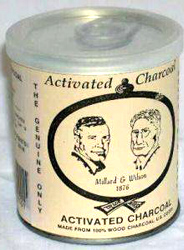
Charcoal can absorb: * TOXINS ACTIVATED CHARCOAL The information is published by courtesy of Millard and Wilson Brand Activated Charcoal. Charcoal has been used as a folk remedy as far back as recorded history. North American Indians used it for the treatment of gas pains long before our ancestors came to this continent. Hippocrates, as well as ancient Egyptian doctors, suggested the use of charcoal for medicinal purposes. Physicians & Natural Healers have used charcoal throughout the world for over 200 years. Charcoal placed in gas masks during World War I counteracted the effects of chemical warfare. HOW IT WORKS Many years of research have proven that charcoal is a safe and very effective natural healing agent, and is free of dangerous side effects. Charcoal acts to purify and cleanse the body due to its amazing ability to attract itself to, and absorb many poisons, heavy metals and toxins. Charcoal can absorb thousands of times its own weight in gases, heavy metals, poisons and other chemicals, thus making them ineffective or harmless. USES
FOR CHARCOAL Among the substances known to be
absorbed to the surface of charcoal are poisons (such as lead acetate,
DDT strychnine), drugs (including aspirin, cocaine, iodine,
phenobarbital, penicillin), and inorganic substances (among them
mercury, chlorine, lead). Every private home should have charcoal on
hand as a ready antidote for poisoning and as a cleansing agent in
infections and various metabolic disturbances, especially where
children are involved. Orally administered charcoal is effective in preventing many intestinal infections. Charcoal has been used externally to effectively absorb wound secretions, bacteria, and toxins, and in packs to treat infections of the face, ears, eyelids, and extremities. All studies show that charcoal is harmless when ingested or comes into contact with the skin, even when it is inhaled accidentally. No allergies to it have been reported. Charcoal is without rival as an agent for cleansing and assisting the healing processes of the body. It is considered to be medicine's most powerful absorbent and is one constituent of the "Universal Antidote"; however, some researchers have shown that charcoal is more effective alone, than in combination. It is of interest to note that even today the mechanism by which charcoal works, either from a physical or chemical standpoint, is not completely known. ACTIVATED
CHARCOAL DIRECTIONS FOR USE
General Intestinal Distress and Gas: May be taken at any time. Mix 1-2 teaspoons in water, up to six times a day. For children: Use one half of the Adult dosage up to six times a day. The use of ginger ale or sweetened water may assist administration of charcoal, however, the use of milk or ice cream require a slight increase in the dosage to render it as effective as a water and coal solution. In the presence of high fever, or for children under the age of three: Consult your physician. Diarrhea: 1/2-1 teaspoon upon notice of first complaint, and again with each bowel movement. Darkening of stool is normal and may continue for several days after use. Drug interaction: Your physician can advise you if activated charcoal interacts with medication you are presently using or if it can be cycled with your medications. Antidote: Activated charcoal may be used as an antidote in many poison and overdose emergencies. Consult your physician and Poison Control Center. Caution: Avoid placing charcoal in open wounds - use it in poultices for such applications. Keep out of reach of children. |