| Shop Our Online Store: | ||
 Since 1980!
|
Momentum 98
Natural Health Store
Taking
Advantage of
the Moment!
Propelling Yourself into Greatness! |

3509 North High Street, Columbus, Ohio 43214 Email: moment98@gmail.com |
|
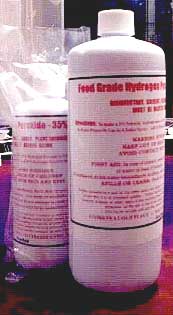
HYDROGEN PEROXIDE (H2O2) FROM FOOD GRADE
**This 7% is diluted
from 35% Food Grade Hydrogen Peroxide PRICES:
OXY077 - 7% Hydrogen Peroxide (16 fl. oz - pint) - $6.95 OXY087 - 7% Hydrogen Peroxide (32 fl. oz - quart) - $12.95 OXY097 - 7% Hydrogen Peroxide (128 fl. oz - gallon) - $39.95 To make a ~3% H2O2 solution: Mix 1 fl.oz 35% H2O2 to 11 fl.oz pure water (or Mix 5 fl.oz 7% H2O2 to 7 fl.oz pure water) --this makes 12 fl.oz (3/4 pint) of 2.92% solution-- (Use distilled water as often as possible) USES FOR H2O2
FOOD Vegetable Soak: If time is a problem, spray vegetable (and fruits) with a
solution of 3%. Leftover tossed salad: Spray with a solution of 1/2
cup water and 1 Tbs. 3%. KITCHEN & LAUNDRY To Freshen the Kitchen: Add 8 oz. of 3% to your wash in place of bleaches. Humidifiers and Steamers: Mix 1 pint 3% H2O2 to 1 gallon of water. PERSONAL HYGIENE: Alternative Bath: Hot
Tubs: Athlete's
Foot: Douche
or
Enema: Nasal Spray: Toothpaste: Denture
Soak:
Deodorant: (Body) ANIMALS: Pets: Fungus/ Mildew
control for roses & vegetables: Insecticide
Spray: To foliage feed crops, put 5 to 16
oz. of 35% food grade hydrogen peroxide into 20 gallons of water. H2O2: CURSE OR CURE? When it comes to hydrogen peroxide therapy there are two main points of view. Supporters consider it to be one of the greatest healing miracles of all times. Those who opposed feel its ingestion is exceptionally dangerous, and only the foolhardy could think of engaging in such behavior. Before either condemning or endorsing hydrogen peroxide, let's take a real close look at what we're dealing with. Hydrogen peroxide is one interesting substance! Hydrogen peroxide should really be called hydrogen dioxide. Its chemical formula is H2O2 - it contains one more atom of oxygen than water (H2O). By now everyone is aware of
the ozone layer that surrounds the Earth. Ozone consists of
three atoms of oxygen (O3). This protective layer of
ozone is created when ultraviolet light from the sun splits an
atmospheric oxygen molecule (O2) into two single, unstable
oxygen atoms. These single molecules combine with others to
form ozone (O3). Ozone is not stable. In fact, it
will quickly give up that extra store of oxygen to falling
rainwater to form hydrogen peroxide (H2O2). It is the hydrogen peroxide in rainwater that makes it so much more effective that tap water when given to plants. With the increased levels of atmospheric pollution, however, greater amounts of H2O2 react with air-borne toxins and never reach the ground. To compensate for this, many farmers have been increasing crop yields by spraying them with diluted hydrogen peroxide (5 to 16 oz of 35% mixed with 20 gal. of water per acre). You can achieve the same beneficial effect with your house plants by adding one ounce of 3% hydrogen peroxide (or 16 drops of 35% solution) to every quart of water you give your plants. (It can also be made into an excellent safe insecticide. Simply spray your plants with 8 ounces of 3% peroxide mixed with 8 ounces of white sugar and one gallon of water.) Hydrogen peroxide is
odorless and colorless, but not tasteless. When stored under
the proper conditions it is a very stable compound. When kept
in the absence of light and contaminants it dissimulates, or breaks
down, very slowly - at the rate of about 10% a year. (This
can
be slowed even further by storing the liquid in the freezer.) It
boils
at 152 degrees Celsius and freezes at minus 2 degrees Celsius. In fact, the cells responsible for
fighting infection and foreign invaders in the body (your white
blood cells) make hydrogen peroxide and use it to oxidize any offending
culprits. The intense bubbling you see when hydrogen peroxide
comes in contact with a bacteria-laden cut or wound is oxygen
being released and bacteria being destroyed. Also regarding enemas and douches, there is another misconception about H2O2 I need to address. The friendly bacteria in the colon and vagina are aerobic. In other words, they flourish in high oxygen environments and thrive in the presence of oxygen environments and thrive in the presence of oxygen rich H2O2. On the other hand,most strains of harmful bacteria (and cancer cells) are anaerobic and cannot survive in the presence of oxygen or H2O2. Hydrogen peroxide produced within individual body cells is essential for life.And no one doubts its effectiveness when it comes to treating infections topically. The controversy deals with ingesting the substance orally or introducing it into the body intravenously. The dispute has been going on for decades (and considering the attitude of our medical community - it will continue for many more decades). I admit that I was personally skeptical
when I first learned about using H2O2 orally, or
intravenously. This healthy dose of skepticism, however, led to
a great deal of investigation, clinical work, and
experimentation. I realize a large majority of readers will
probably never be convinced that H2O2 is
a safe and effective compound, I am. Hydrogen peroxide is safe,
readily available and dirt cheap. And best of all - it works! Dr. Farr has shown that hydrogen peroxide
stimulates enzyme systems throughout the body. This triggers an
increase in the metabolic rate, causes small arteries to dilate
and increase blood flow, enhances the body's distributions and
consumption of oxygen and raises body temperature. We are just beginning to
learn exactly how H2O2 works... Much of the interest in hydrogen peroxide
waned in the 1940s when prescription medications came on the
scene. Since then, there has been little economic interest in
funding peroxide research. After all, it is dirt cheap and
non-patentable. Let's look at several conditions that seem to
respond especially well to H2O2 therapy.
First, keep in minds that there are two methods
of administering the peroxide - orally and intravenously. While most
conditions respond remarkably to oral ingestion, Hydrogen peroxide is only one of the man
components that help regulate the amount of oxygen getting to
your cells. USES FOR FARM ANIMALS
Hydrogen Peroxide & Cows It was in 1985 that the first dairy farmer began injecting hydrogen peroxide in the water system of his whole farm. The water on his farm was polluted and mastitis was a problem with his herd. After continual use since that time, this same farmer noticed with satisfaction the healthy state of his cows. In April, 1988, the butterfat content of his Holstein cows was up to 5.3%. Another farmer who weighs the milk from
every cow at every milking, reported that his milk production
increased from 6 to 8 pounds per cow per milking. Others have
reported their bacteria count has gone down to less than 2,000
per cubic centimeter. Use 8 ounces of 35% food grade hydrogen peroxide per 1000 gallons of water or 30 ppm. If you do not have an injector, start out by using 1 teaspoon of 35% in the drinking cups at the stanchion. This same ratio is used for all animals: cows, pigs, poultry, sheep, goats, rabbits, and birds - increasing the oxygen level to the blood and cells. When hydrogen peroxide has been used for cattle, an increase in milk production and an increase in butterfat content was reported. Farmers have also reported less mastitis in their herds. Hog farmers have reported that they have been able to market their hogs using less feed in a shorter growing time (as much as 30 days less). Turkeys and chicken growers reported increased weight per bird using less feed. A man in Wisconsin reported that he has had the best reproduction rate of his buffalo since using hydrogen peroxide in their drinking water. Peroxide application into the well water, or city water, can best be accomplished by a metering device, which keeps the application more constant and thorough (although manual application can be a second best). The rule of thumb is 8 to 10 oz. of 35% hydrogen peroxide to 1000 gallons water in a holding tank or stack tank, striving to attain a reading 30 ppm after application. In order to get a true reading of the amount of oxygen remaining in the water after the application, use peroxide test strips, designed especially for this very purpose. When peroxide is being applied throughout the entire watering system, with a reading of 30 ppm at the end of the line, all the water should stay clean of rust, bacteria, and algae, plus some other foreign materials found in some water. Thus the waters stay clean and help to stop the spread of diseases, and hog nipples stay clean. Through this method of water purification, there have been many reports of cows passing worms, hogs without even parasite eggs in the fecal matter (with no previous worming medication for over an extended period of time). Some animals cut back on feed (depending on the nutrient level in their feed program). As long as the iron and mineral level in the body is where it should be, the peroxide will attract and hold oxygen in the blood and cell of the body, allowing the body's fuel system to burn more efficiently. This process of water purification is especially helpful in a confinement barn of any animal. Use in a Dairy Barn: Use as a pipeline rinse for milk stone, depending on the length of the pipeline. As a rule, 2 to 4 ounces of 35% hydrogen peroxide to 15 gallons of water will work with good results. This amount also works for rinsing milk cans and the bulk tank, to keep down bacteria as well as milk stone. (Note: If hydrogen peroxide is being injected into the water system at 30 ppm, the above ratio may need to be cut in half.) FOR A POWER WASH: in the dairy barn as well as the hog house (in the sanitation process), mix enough peroxide into the water so that a light foaming action comes when spraying the floors and walls. Leave this until the foaming subsides, and rinse again. If the foaming action recurs, then the areas which still foam are not clean. Either raise the peroxide level of the original rinse water, or merely re-spray the areas still contaminated with the present amount. FOR AN UDDER WASH: use 1 oz of 35% hydrogen peroxide to a gallon of warm water. The cows tend to have softer teats and are freer of bacteria on the teat ends, which helps to keep down bacteria in the bulk tank. TO HOLD COLOSTRUM MILK: from spoilage until it is all fed to the newborn calf, depending on the time of year, pH of the milk, temperature, etc., you can use from 1/4 oz 35% hydrogen peroxide up to 1 oz. 35% hydrogen peroxide per gallon of colostrum milk. FOR NEWBORN CALVES: To give them extra oxygen: add 10 to 15 drops 35% hydrogen peroxide to a bottle milk, morning and evening, per calf. This has helped to brighten up calves, and in some cases of scours, depending on the pH of the milk being fed. A DRENCH can be given for high fever and off feed cows with mastitis(depending on the situation and case). Mix 1 to 2 ounces 35% hydrogen peroxide to 1 quart of water, drenching the animal morning and evening for as long as needed (2-3 days). AILING COWS:
Use 1 pint of 3% hydrogen peroxide to 5 gallons of water. CONVERTING CROP RESIDUE INTO CATTLE FEED: Hydrogen peroxide has also been used in converting crop residue into cattle feed. This could be an asset for the farmer, especially in times of doubt. It is possible to take straw. cornstalks, corn cobs, soy bean residue, sawdust or even ground up brush. By treating these materials with a weak solution of hydrogen peroxide, they can be turned into animal feed. USING H2O2 INTRAVENOUSLY
H2O2 has been used in intravenous therapies for emphysema and congestive lung problems. Within minutes oxygen from hydrogen peroxide begins to bubble up between the membrane lining the lungs sacs and the accumulated mucus. (Dr. Farr refers to this as the "Alka-Seltzer effect") The patient begins to cough and expel the material that has accumulated in the lungs. The amount of bubbling, coughing and cleansing can be regulated by simply turning the H2O2 on and off. As the peroxide clears the lung surface and destroys the bacterial infections, the patient regains the ability to breath more normally. We continue to receive reports from patients for whom the technique has improved breathing so much that a wheelchair and supplemental oxygen are no longer needed. If emphysema were the only ailment
successfully tried by H2O2 therapy, it
would still rank as one of the top health discoveries of all time. Fortunately,
H2O2 works wonders on a multitude of health
problems. It does so by increasing tissue oxygen levels. A
closer
look at how we've decreased the availability of external and
internal oxygen, will show you just how important this can be. Internal oxygen availability is also under attack. The chlorination of drinking water removes oxygen. Cooking and over-processing of our foods lowers their oxygen content. Unrestrained antibiotic use destroy oxygen-creating bacteria in the intestinal tract. Dr. Johanna Budwig, of Germany, has shown that for proper cellular utilization of oxygen to take place, our diets must contain adequate amounts of unsaturated fatty acids. Unfortunately, the oils rich in the fatty acids have become less and less popular with the food industry. Their very nature makes them more biologically active, which requires more careful processing and gives them a shorter shelf-life. Rather than deal with these challenges, the food industry has turned to the use of synthetic fats and dangerous processes, like hydrogenation. Using
Hydrogen Peroxide Internally
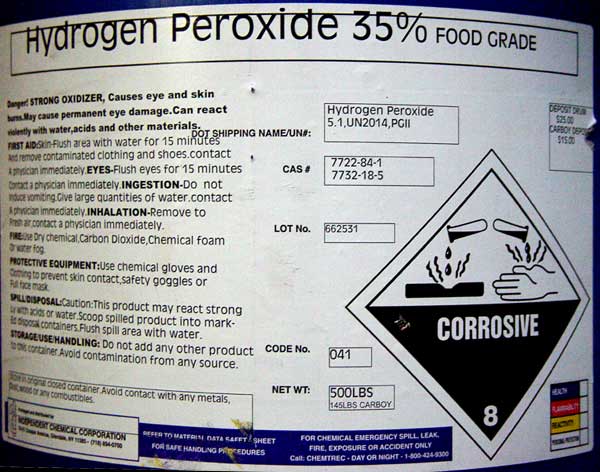
Preliminary Cautions for Internal H2O2 use: If 35% hydrogen peroxide is spilled on the skin, rinse immediately with tap water. Fingertips may whiten temporarily. (Normal color will return)
the following amounts were used: 3% = 1 ounce of 35% hydrogen
peroxide and 11 ounces of distilled water. 12% = 1 part 35% hydrogen peroxide of 2 parts of distilled water. 35% Food Grade Hydrogen Peroxide is
getting increasingly difficult to find. 6% Food Grade H2O2 is widely available. Individuals using peroxide for home use
find this concentration safe and convenient: Purging Schedule for 3% H2O2
Get a gallon of distilled water, take out
20 ounces of water and replace it Drink this mixture on an empty stomach
1 oz. the 1st day THEN TRY SAFETY & STORAGE TIPS View the MSDS for 35% Hydrogen Peroxide
1). Keep hydrogen peroxide out of reach of children. 2). Never transfer hydrogen peroxide into unlabeled or improperly labeled containers. 3). If concentrated hydrogen
peroxide is accidentally spilled on the skin, 4). If concentrated hydrogen
peroxide is accidentally ingested, 5). For spillage of hydrogen
peroxide concentrate, dispose of
according to Federal, Flush the spill area with water. 35% food grade hydrogen peroxide should be stored in the freezer or in the refrigerator and labeled as to contents. 35% food grade hydrogen peroxide will not freeze unless the temperature is 33 degrees below zero. Low concentrations, such as 3% or 6% would
freeze, so freeze storage is not recommended. Information provided on this page is for educational purposes only. Always consult a health care professional before using any product. |