| Shop Our Online Store: | ||
 Since 1980!
|
Momentum 98
Natural Health Store
Taking
Advantage of
the Moment!
Propelling Yourself into Greatness! |

3509 North High Street, Columbus, Ohio 43214 Email: moment98@gmail.com |
|
Select a Product:
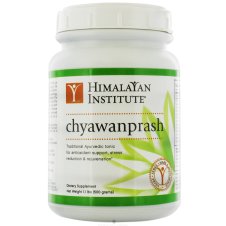
Chyawanprash
Ayurvedic
Tonic A Traditional Ayurvedic tonic for
antioxidant support,
stress reduction
& rejuvenation*
general health, increase energy, and support the body's natural resistance to disease. The principle active herb, Amla fruit (Amalaki) which is one of the world's most concentrated sources of Vitamin C, works with other ingredients to create a powerful and effective antioxidant. Regular ingestion of Chyawanprash is believed to rejuvenate and fortify both the mind and body and is beneficial to people of all ages. ABOUT AYURVEDA & CHAVANAPRASH Ayurveda views our bodies as being organized into two interactive systems. The first is a set of three body energies, or Doshas, that must be kept in balance. They are: Vata (the air or movement principle), Pitta (the fire or metabolism principle), and Kapha (the water or structure principle). The second system
is the seven
constructing elements of the body, or Dhatus. Each Dhatu is considered to be the result from digestive transformation of the proceeding Dhatu, with the aid of the Pitta or metabolic energy. The body stays healthy if these basic building blocks (Dhatu) are strong and healthy. The defense system of the body remains powerful and diseases cannot invade the body. Chavanaprash is specifically designed to nourish the seven Dhatus and balance the three Doshas, or body energies. It does this both directly, by providing nutrients, and indirectly, by toning the digestive, respiratory, and glandular system that provide and control the Dhatus and Doshas. Pregnant women and people with gastric ulcers, acidic urine, watery stools, excess stomach gas or nocturnal discharge problems should consult with an Ayurvedic doctor before taking Chavanaprash. Chavanaprash could be useful in conjunction with other Ayurvedic remedies in these cases, but is not appropriate taken alone. ** Not for Diabetics ** Chavanaprash Chavanaprash (pronounced Chai' van Prash' and spelled many different ways) is a marvelous fruit and herb tonic that has been passed from generations to generations for more than 5000 years. It is probably the most complete herbal tonic in the world. It may also be the most flavorful way to wake up ever created! Chavanaprash
starts with Amala, or Indian Gooseberry
(Amblica officianalis, N.O. Euphorbiaceae).
Amala has a special form of
Vitamin C that is stable even when
heated. One Amala fruit has as much C as
three to six lemons. It is also a good source of
fiber, and
it has a tart, bracing flavor. Prime quality
Chavanaprash provides 50
to 60 herbs, extracts and minerals along
with the Amala. The
preparation of Chavanaprash starts with
boiling
the Amala fruit and many of the
herbs for a long time. Then they are sauteed
in ghee, or clarified
butter while adding
more herbs.
This blends the flavors and essences, and
helps stabilize the
ingredients. Next
more herbs and
minerals are added. Finally dehydrated sugar
cane juice and honey
are added, to activate the energies of the
body This is a health
giving product, full of minerals, and
not depleting when used correctly. The
Indian word for it is jaggery. The recipe for Chavanaprash was said to have been given to a great sage, Chyavana, by the Ashvinikumaras (physicians to the gods). When Chyavana was a very old man, the king gave him his young daughter Sukanya in marriage. With her help, Chyavana got the Ashvinikumaras to give him the secrets of rejuvenation. After a year of cleansing and rebuilding practices that included eating Chavanaprash, as well as yoga, meditation, and fasting, Chyavana recovered his lost youth and was able to have a long and happy marriage with the princess Sukanya. Chyavana became one of the founding fathers of Ayurveda, which means "knowledge of life", or the science of longevity. Chavanaprash in modern times With a wonderful reputation as well as a totally unique, stimulating flavor,Chavanaprash has become the favorite tonic in India. Millions, perhaps hundreds of millions of Indians take it daily. Families make it in their homes and Ayurvedic pharmacies prepare it for sale. The government of India has been sponsoring, medical research and the education of Ayurvedic physicians in about 100 colleges. There are already over 300,000 Ayurvedic doctors. Together, the research and training are creating a revival of Ayurveda after several centuries of neglect caused by invaders who tried to destroy the ancient religion and lifestyle. Modern research methods have been used to evaluate the effects of Ayurvedic remedies such as Chavanaprash. This research has often validated the Ayurvedic theory behind the remedies, as well as identifying their actions in Western terms. In Ayurveda, Chavanaprash is the most important of the Rasayanas. Rasayanas are special combinations of fruits and herbs designed to open the mind, spirit and senses, strengthen and cleanse the body, and fortify the immune system. In fact, the name Rasayana means food that keeps old age and disease away. Chavanaprash
provides nutrition and tonification to
the nervous, endocrine and
reproductive systems. It can also assist in
weight control. It
will stimulate the appetite of underweight
people,
and enhance metabolism and energy conversion
in overweight people, if
eaten regularly. It is also given to people
recovering from chronic
lung conditions such as tuberculosis
and pneumonia, By stimulating
the whole body, directly or indirectly,
through the flavors as well as the
toning properties of the herbs, Chavanaprash
encourages the body to become strengthened and
invigorated. Chavanaprash is designed to
be used for
rebuilding after a complex purging and
cleansing
process. Even without the rigors of
a complete purification, however, Chavanaprash
can produce similar
results over the course
of a year
or so. Of course, it is important to practice
a healthy lifestyle if you don't want to be going one
step
forward and two steps back all the time.
Ayurveda recommends
taking Chavanaprash twice
daily with a cap of scalded cow or goat milk.
People on a milk-free diet can eat it with
water or herb tea or grain beverage.
Adults
start
with
1/4 to 1/2 teaspoon and work up to
one to three teaspoons per serving. Milk balances the
spiciness, and carries the nutrients
through the body. To get the most value from Chavanaprash, the diet should emphasize fruits, vegetables, whole grains, ghee (clarified butter), lean meats such as seafood and poultry if you are not a vegetarian, and dairy products if you are not sensitive to them. Foods to avoid
are very pungent, spicy food such as
chilies, hot sausages, acidic foods, vinegar
and pickles, white flour,
white sugar, and white salt, and
coffee, tea, alcohol and
tobacco. With
regular use
Chavanaprash - even in the modern age - you
can enjoy good health and long life, following the
ancient
path of Ayurveda.
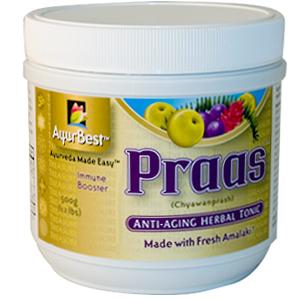
AyurBest PRAAS
Each Teaspoon of Praas contains: Emblica
officinalis
(Indian gooseberry), Honey, Sugarcane
concentrate, Clarified Butter
(Ghee), Withania somnifera (Winter cherry),
Curcuma zedoaria (Zedoary),
Boerhavia diffusa (Spreading hogweed),
Terminalia chebula (Myrobalan),
Elettaria cardamomum (Cardamom), Cyperus
rotundus (Nutgrass), Tribulus
terrestris (Caltrops), Asparagus racemosus
(Indian asparagus),
Leptadenia reticulata, Piper longum (Long
pepper), Pterocarpus
santalinus ( Sandalwood), Phylanthus
urinaria, Adhatoda vasica (Malabar
nut), Aquilaria agallocha (Aloe wood), Vitis
vinifera (grapes), Aegle
marmelos (Bael), Tinospora cordilfolia (
Indian tinospora), Nelembium
speciosium (Indian lotus), Desmodium
gangeticum, Clerodendrum phlomidis
(Wind killer), Oroxylum indicum , Phaseolus
trilobus (Wild kidney
beans), Teramnus labialis , Solanum indicum
(Egg plant), Glycyrrhiza
glabra (Liquorice), Zingiber officinale (Dry
ginger), Hemidesmus
indicus (Indian sarsaparilla), Rhus
succedanea (Galls), Corchorus
fascicularis, Desmodium laxiflorum,
Dioscorea sativa (Asiatic yam),
Uraria picta, Stereospermum chelenio, Inula
tacemosa , Herpestis
monniera (Brahmi), Evolvulus alsinoides,
Asclepias curassavica, Sida
cordifolia, Pistacia integerrima, Solanum
xanthocarpum, Gmelina
arborea, Stereospermum suaveolens, Bambusa
bambos (Bamboo camphor),
Cinnamomum tamala (Indian Bay leaf),
Cinnamomum verum (cinnamon), DRACHSHA HERBAL REVITALIZER
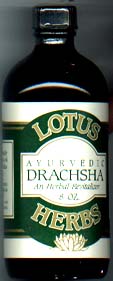
Drachsha is a digestive and herbal revitalizer. It makes digestion and elimination more efficient, thereby detoxifying, cleansing, and toning the tissues. It improves energy by increasing absorption of nutrients and stimulates the body to increase its natural flow of digestive juices instead of replacing them with enzymes. Replacement of enzymes, according to Ayurveda, stops the body's natural production of them. Ayurveda believes that the body heals itself and our herbs are to stimulate the body's natural processes. Traditionally, Drachsha was used for low energy especially after eating, for slight constipation, to reduce sweet cravings, to reduce weight, to improve skin luster and complexion. Tastes delicious. Note: It is a fermented liquid and has a small amount of self-generated alcohol. Take: 1-2 tablespoons after meals. Ingredients: Grape juice, Cardamom, Cinnamon, Cloves, Coriander, Cumin, Fennel, Ginger, Mace, Nutmeg, Oregano, Black Pepper, Long Pepper, Saffron, Tumeric. Herbal Zap Immune Support
Herbal Zap works best when taken at the first signs your immune or respiratory system is feeling a challenge. At these times, we recommend pouring 2 packets
into a cup of hot water and slowly sipping so your
body has a chance to fully assimilate the power of
the Zap. Herbal Zap works according to the principles of Ayurveda, restoring balance to the vital energies, doshas, increasing Agni, “inner-fire”, and promoting a positive state of health. Herbal Zap contains 14 potent Ayurvedic herbs. The ingredients are wild gathered wherever possible and always herbicide and pesticide free. The descriptions below tell you what’s in Herbal Zap and the use for each herb in the traditional system of Ayurveda. The Herbal Zap Ritual
Ayur Dehi! Sanskrit for “May health be given to you!”
Herbal Zap also is a wonderful addition to a cup
of tea, creating a spicy chai. It instantly adds
zest and extra health benefits to any hot
beverage. |